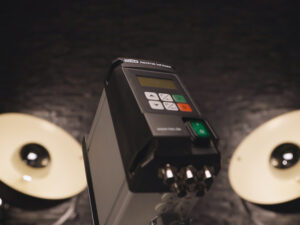
Resistors are designed to convert electrical energy into heat, which inevitably leads to the heating of exhaust air and adjacent housing parts. Temperature management is therefore of particular importance for braking resistors. In many cases, the products are used in very tight environments. Products of different designs or several braking resistors inevitably influence each other in this case. A first step is therefore to check the heat-conducting properties of the substrate on which the braking resistor was installed. Poor heat conduction leads to a higher operating temperature of the resistor. A direct mounting on a heat sink or a cooling surface can provide a remedy, which significantly increases the continuous power of the resistor or reduces the surface temperature. Depending on the type and size of the cooling surface or the heat sink, the power can be increased by a factor of 1.5 up to 4. For the highest possible safety, there is the option of monitoring the temperature of the resistor with a temperature switch. If a nominal temperature is exceeded, the temperature switch opens and triggers a signal contact. The temperature switch is equipped with two ready-to-connect stranded wires for this purpose.
If installation conditions are not optimal due to compact structures or protective devices against environmental influences, preventing adequate air supply and exhaust or sufficient heat dissipation via cooling surfaces, REO liquid-cooled systems can be used.